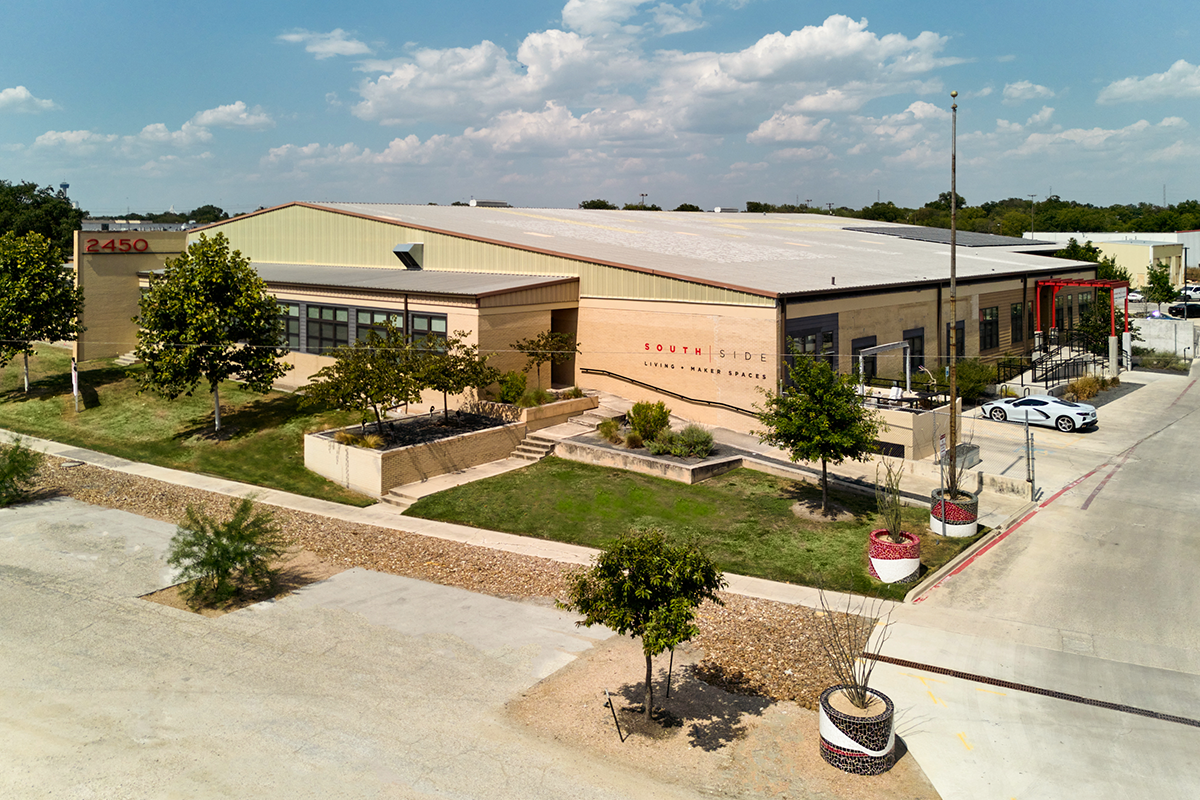
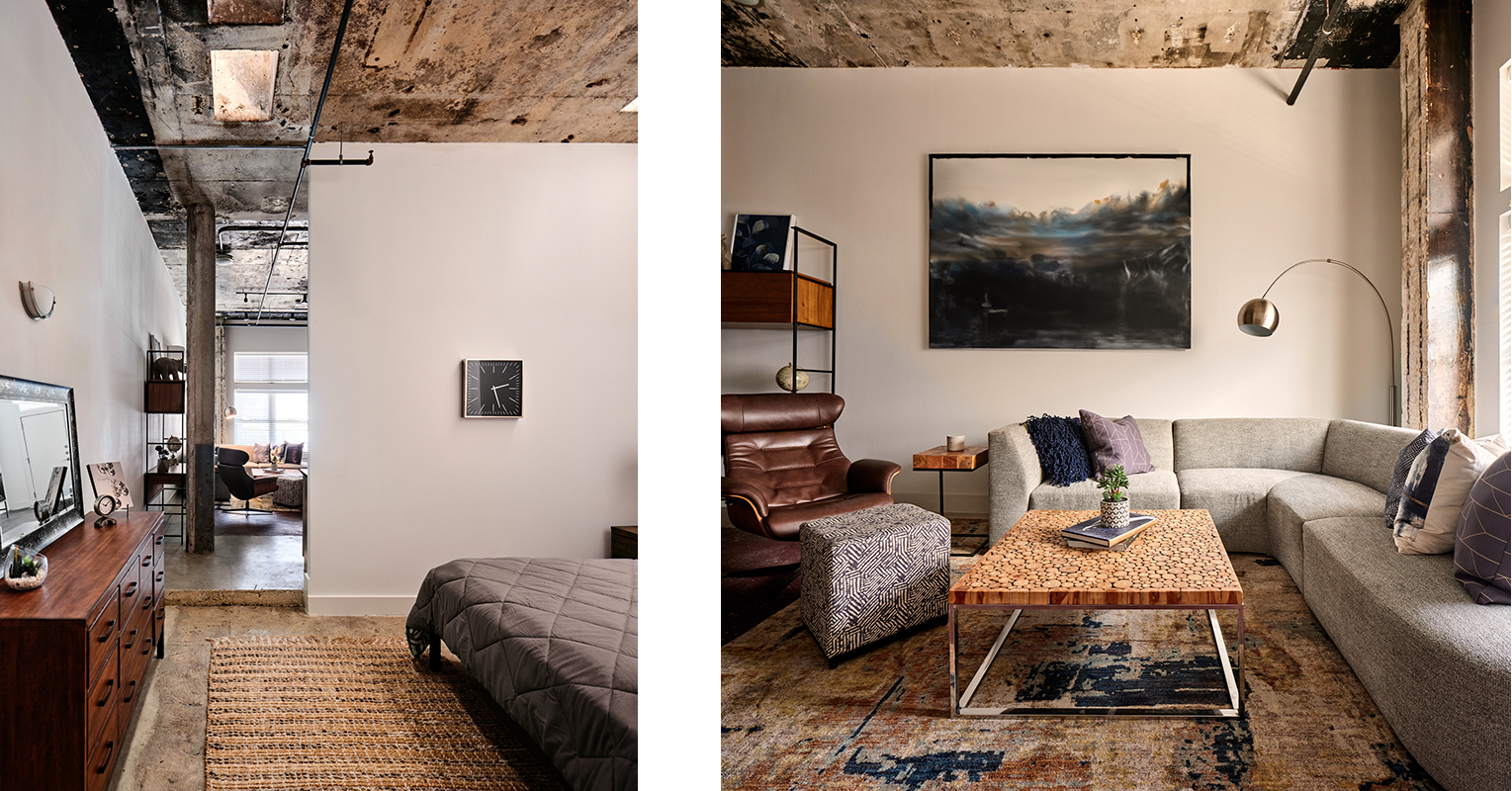
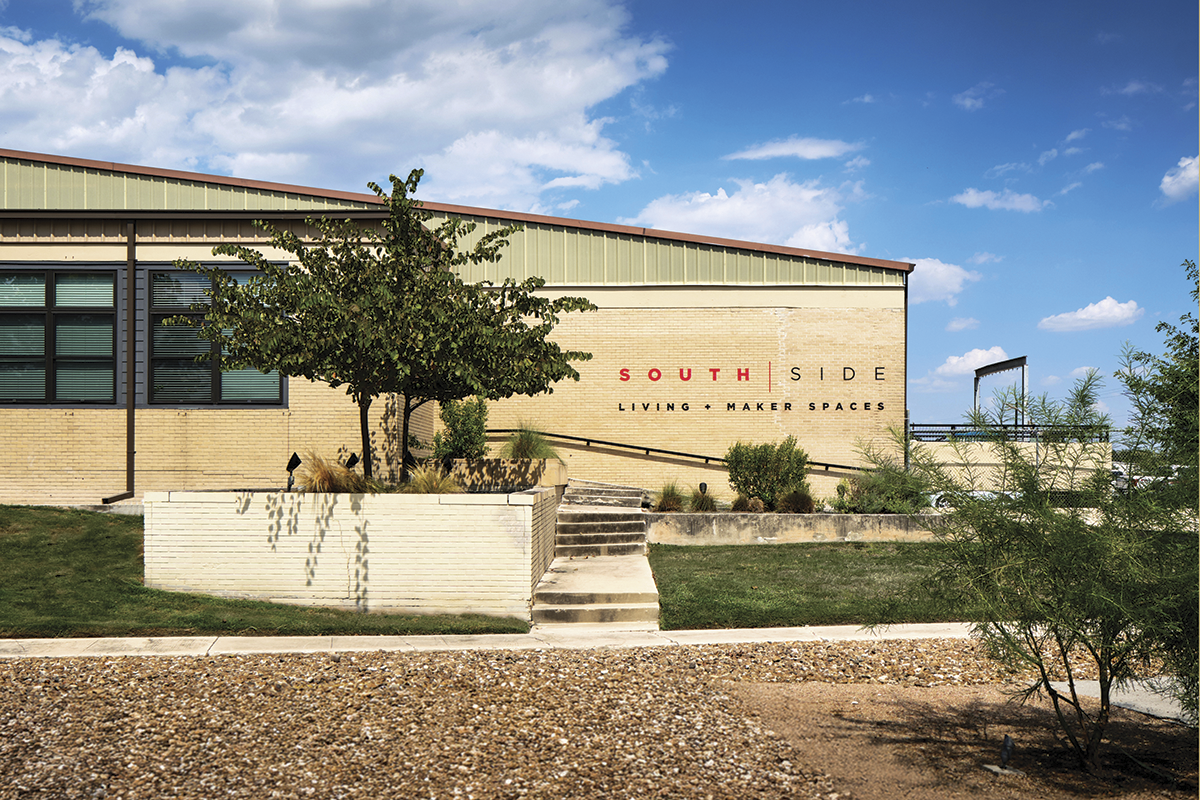
Since the mid-2010s, the project’s location has experienced positive growth: the Mission District now offers trailhead access to the Mission Reach, and is also home to the Mission Park UNESCO World Heritage Site, dedicated in 2015. Completed in 2018, South Side Living + Maker Spaces delivered 65 much-needed housing units to the area. While showcasing sustainability, the project also embraces an industrial aesthetic, material character, and the potential of this emerging cultural district.
The Lifshutz family began redevelopment of what is now the popular Blue Star Arts Complex in the late 1980s. Over time, they transformed abandoned mercantile buildings along a quiet stretch of the San Antonio River. The area became a vibrant hub for arts, dining, and shopping, adjacent to the historic King William district. Low rents for artists, gallerists, and key tenants seeded its growth. The project’s success provided a model for adaptive reuse of warehouse space serving the creative sector.
Expanding an Arts-Based Redevelopment Model to a New Neighborhood
In time, Blue Star’s success meant rents became less attractive to artists. Owner James Lifshutz sought an opportunity to create new, more affordable live-work spaces in the adjacent Mission District. With the acquisition of the warehouse complex, we worked with James to apply his established arts-and-living model, prioritizing affordability and flexibility in providing apartment and studio spaces for local creatives. This approach suited the sprawling structure. We preserved its essential industrial character while making it a livable, artisan-friendly enclave.
Throughout the design process, we worked closely with the owner to preserve the structure’s patina and industrial character. Our design team embraced honest materiality while transforming the space into efficient, contemporary live/work apartments. For example:
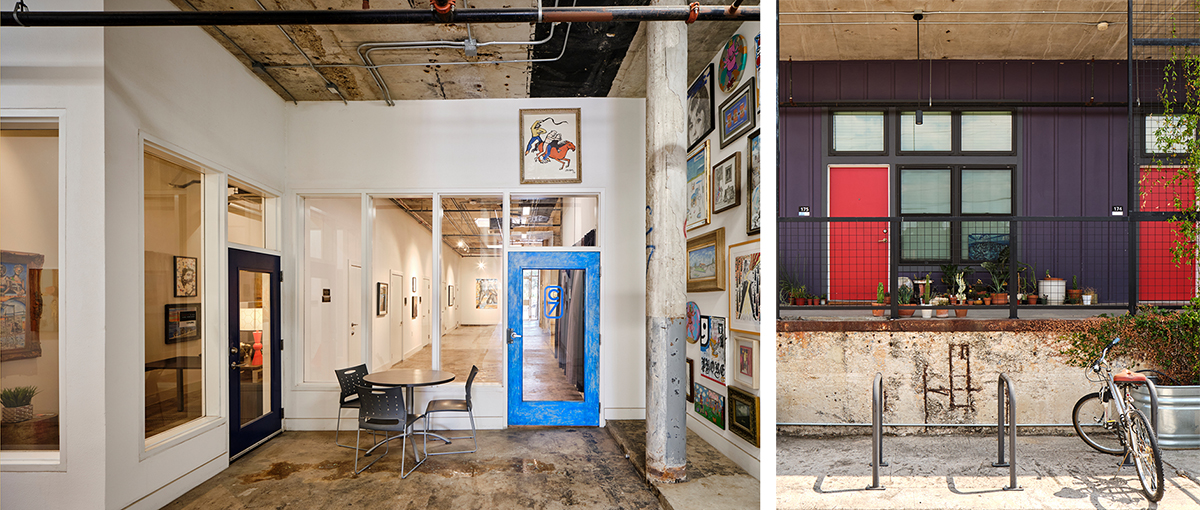
- We dedicated a portion of the widened main corridor to gallery space.
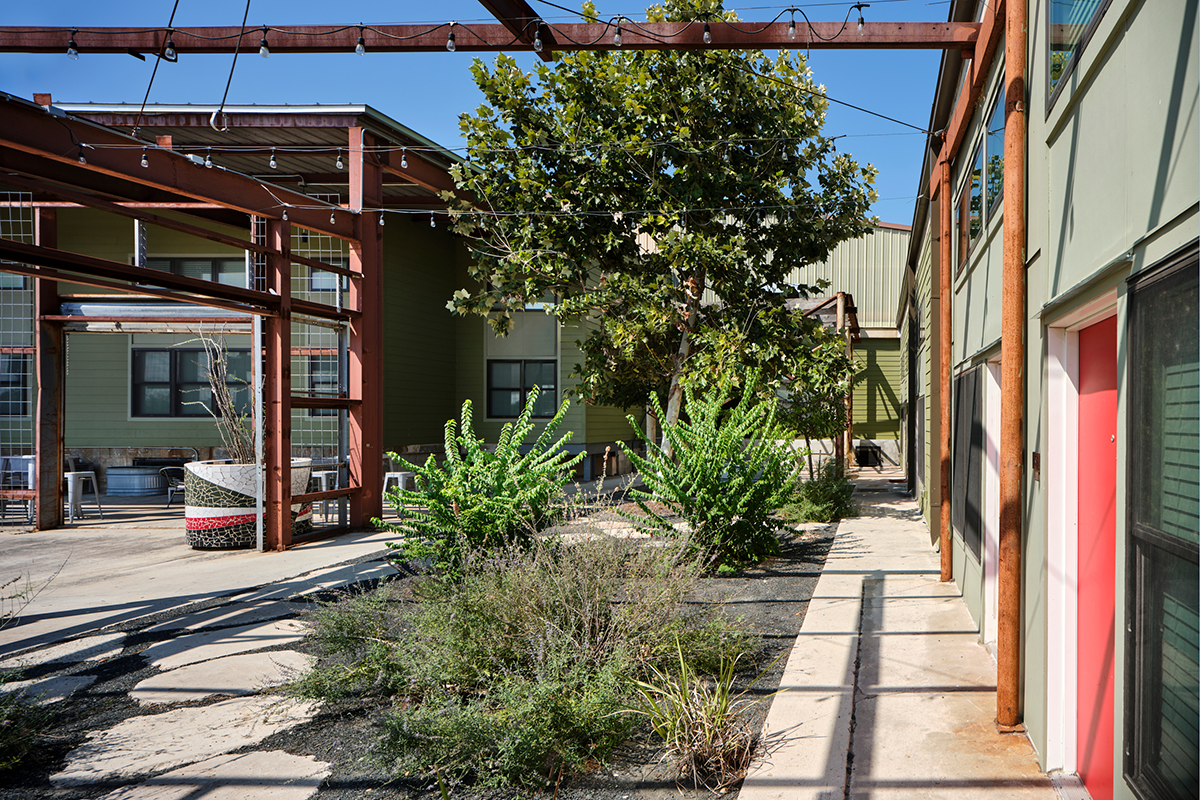
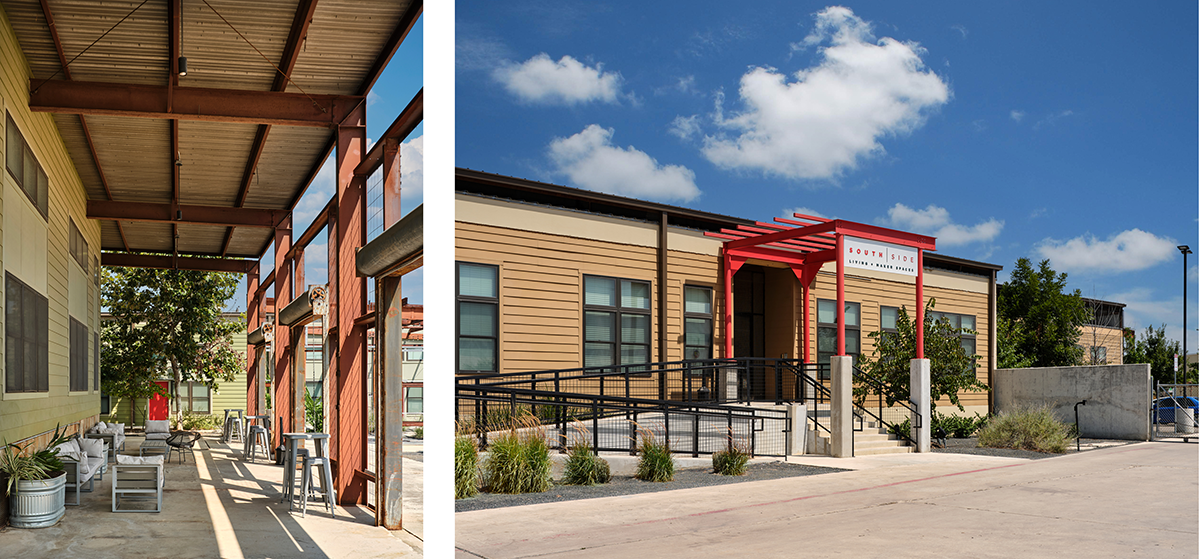
- We repurposed abandoned metalwork and steel frames to build exterior courts and seating areas.
- Some apartment units open to both the outdoors and the gallery corridor, which also features a maker space—a shared workshop area. This setup allows artists’ studios the option to be included in gallery open-house events. A large, open-air courtyard provides overflow space for reception crowds and a relaxed setting for social gatherings.
- We identified an opportunity to enhance the building’s street presence by illuminating a void beneath a low-sloping roof. At night, this wedge of interstitial space gives off a soft glow, visible from Roosevelt Avenue.
- Lessons learned will inform our process in future adaptive reuse projects, which we see as an important trend in housing going forward.
A Community for the Urban Core
South Side Living + Maker Spaces successfully exported the “Blue Star formula.” Rents remain affordable, and spaces are flexible for artists and makers. The gallery space can be opened to the public, helping showcase resident artists and serving as the residential community’s “campfire,” its social centerpiece. The development promotes the strategic advantage of using adaptive reuse to increase affordable housing near downtown – a key priority for the health of our urban core.