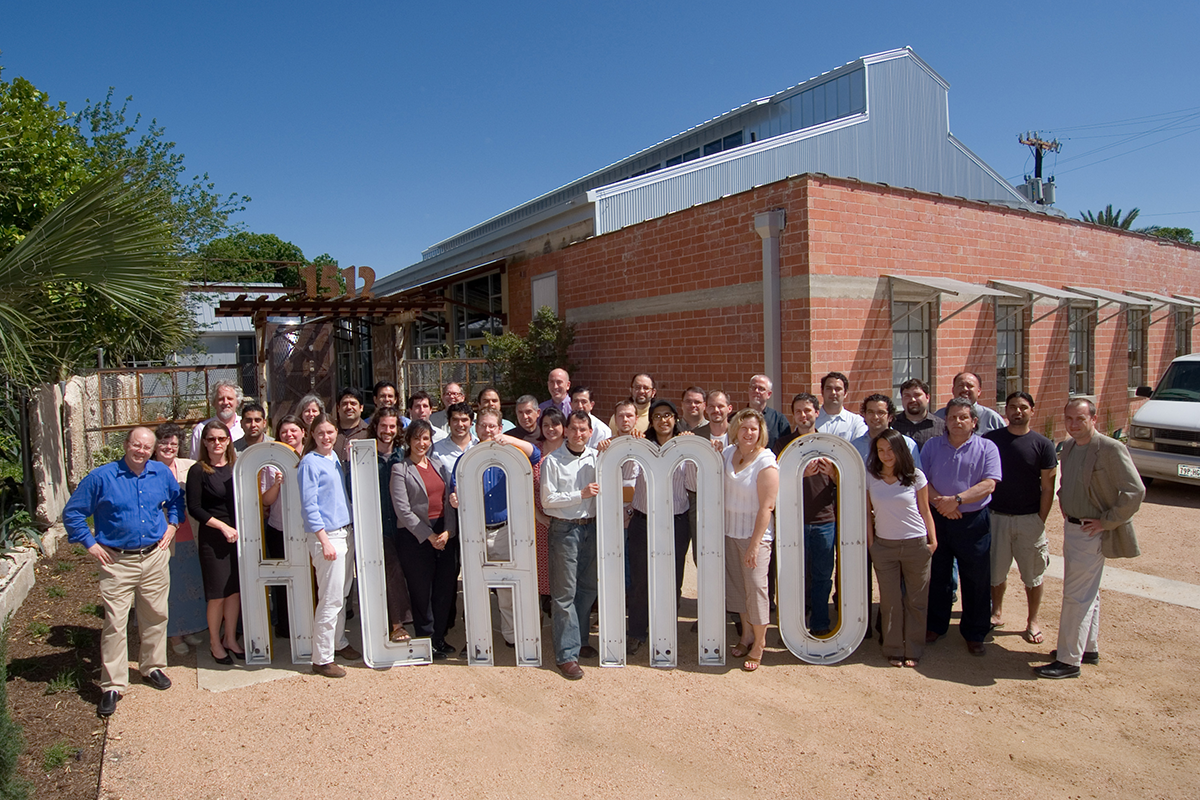
Adaptive reuse is, at its core, a celebration of continuity: bringing new life into existing structures by honoring and transforming what is already there. In developing the SoFlo Office Campus, the two owner-architect firms were highly motivated to exploit the cost-saving aspects of adaptive reuse yet also energized by the creative possibilities. Paring the structures down to their bones yielded open, flexible spaces; adding back harvested materials preserved a sense of local history. The process gave us our own memories and story to tell, now nearly 20 years from completion.
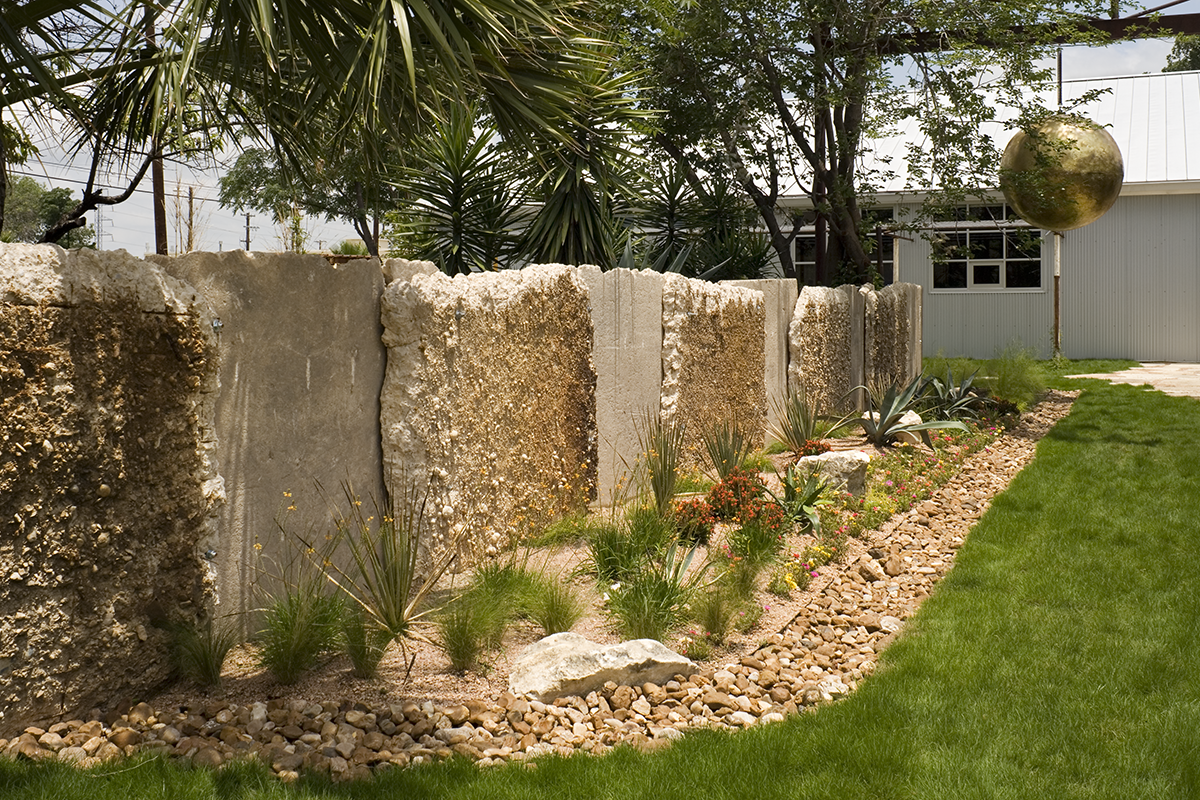
“In working with found artifacts, we found plenty of opportunity for innovation, and not a little humor,” recalls Mike McGlone, FAIA, who was Alamo’s partner in charge and design lead. “For example, a pile of industrial springs gave rise to the idea of suspending the gold Fiberglas sphere we inherited from our design for San Antonio’s Papal Mass site in 1989.” The giant gold glitter ball, once an oversized finial on a giant outdoor stage, now gently bobs from its giant spring among leafy tree branches at the courtyard ell, a signature conversation piece.
Finding our Footing in an Emerging Redevelopment Zone
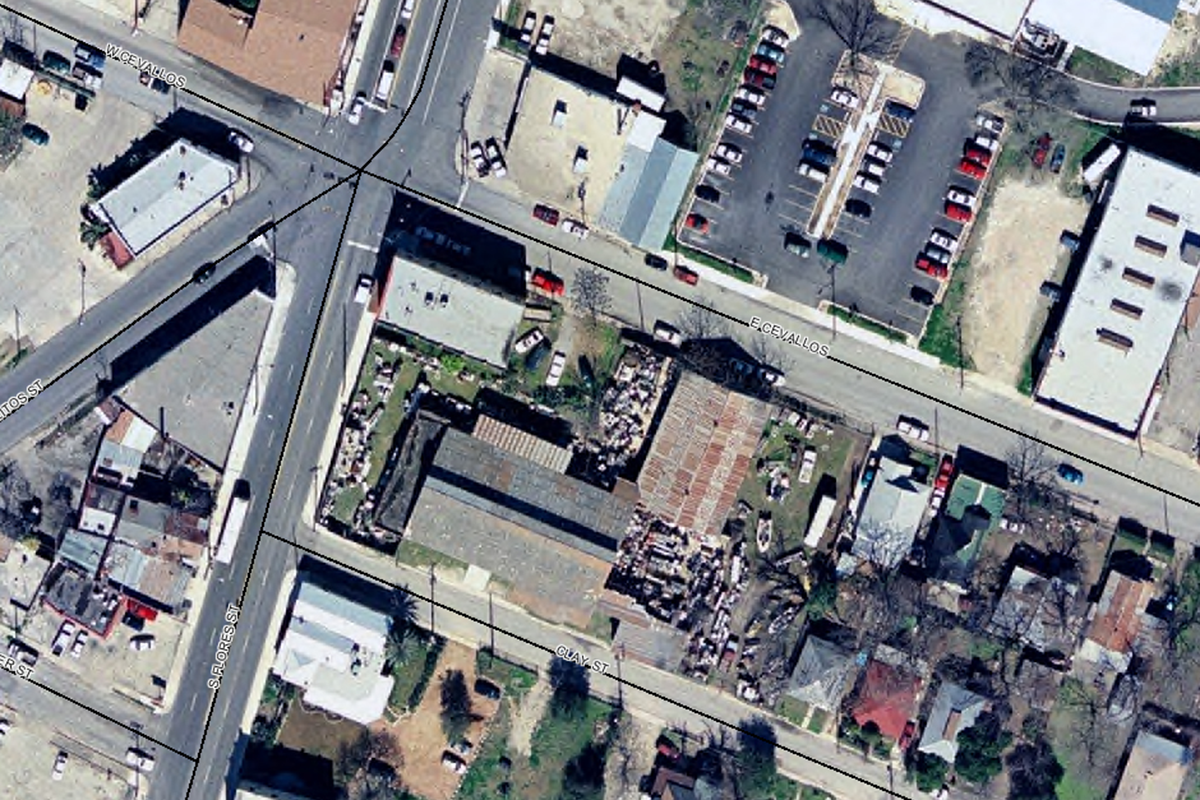
Originally zoned for heavy industrial use, the 1-acre corner lot was rezoned using a City of San Antonio incentive program aimed at the redevelopment of infill urban sites. As a part of the rezoning process, the architects facilitated public meetings with the City’s Office of Historic Preservation, zoning, and planning departments. To build community support for the project, the co-owners held neighborhood meetings with residents, local business owners, and community groups. The team gathered input on the design direction and, more broadly, the project’s ‘fit’ within the existing Neighborhood Master Plan. With strong local support, our combined offices created not just an office campus – we created a model for redevelopment in the area.
Urban Pioneering Sparks Residential Development
As surveyed from the air in 2005, the corner lot at South Flores and Cevallos Street was a snapshot of urban blight – 1 acre with three rusting buildings (filled with used commercial kitchen equipment), congested with abandoned vehicles within the fenceline. By reversing decades of neglect, our project (along with two neighboring office conversions and two significant warehouse-to-residential conversions) formed a node for local redevelopment. Proving the value of a pioneering urban outpost, a wave of new residential development transformed the area over the decade that followed.
Our Factory Conversion at 1512
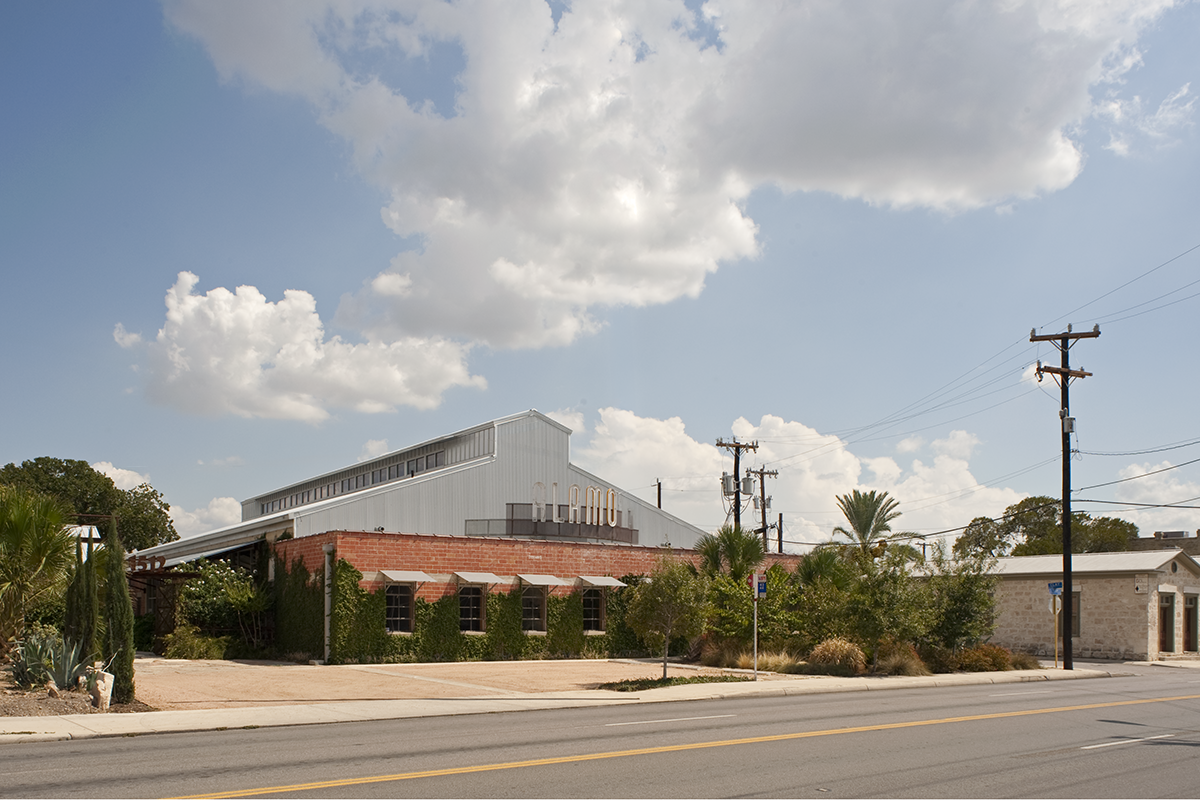
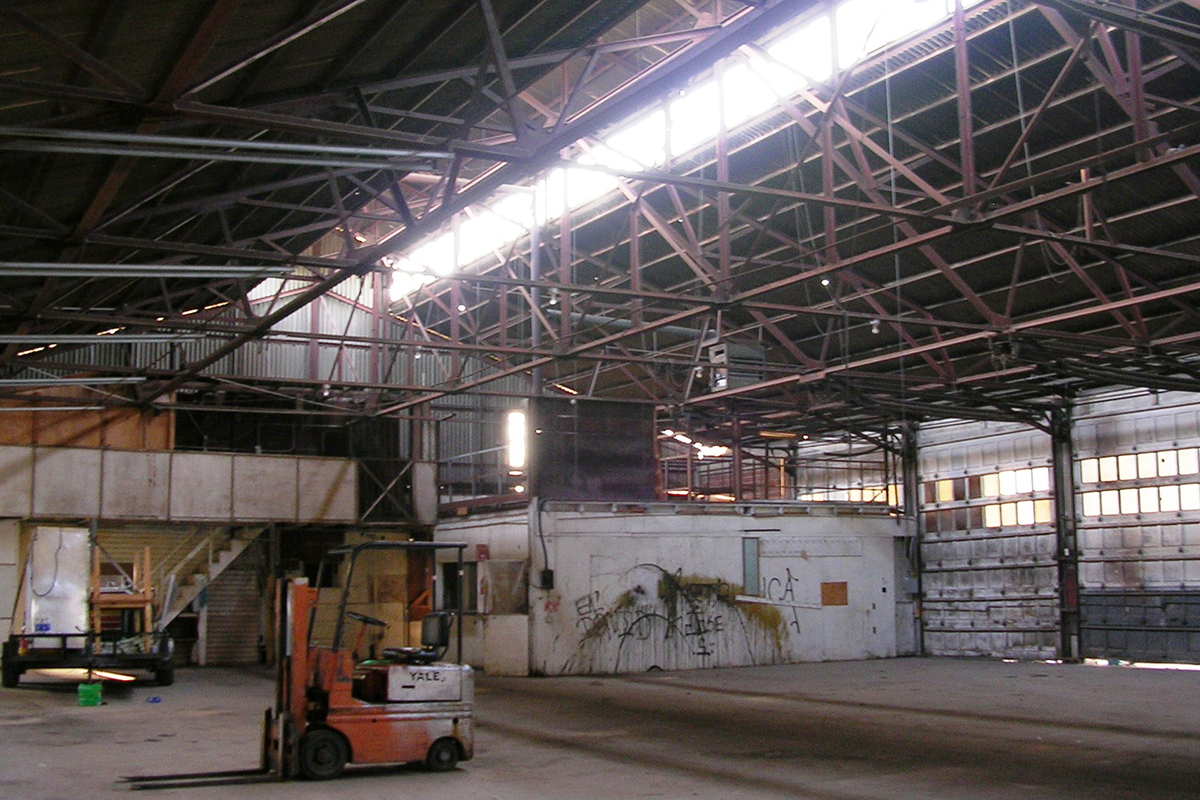
Constructed in 1948, the Bedell Trailer Company building presented some expected challenges, such as asbestos content and energy-inefficient construction, while offering a rich palette of repurposing opportunities. Following the major abatement of the corrugated cement-asbestos siding, roofing, and window glazing components, the remaining shell structures were re-clad in galvanized corrugated metal siding and roofing. New operable windows and storefront systems were installed. At that point, we could add harvested elements that provided texture, material interest, and an edgy character.
Led by partner Mike McGlone, FAIA, the design team for our building wasted no upcycling opportunity, and the completed effect is at once rustic and contemporary, at home in its urban setting.
- Steel sash clerestory windows were repurposed as interior guardrails.
- The rare find of longleaf pine factory flooring now wraps central interior walls, and reclaimed pine trims door and window casings.
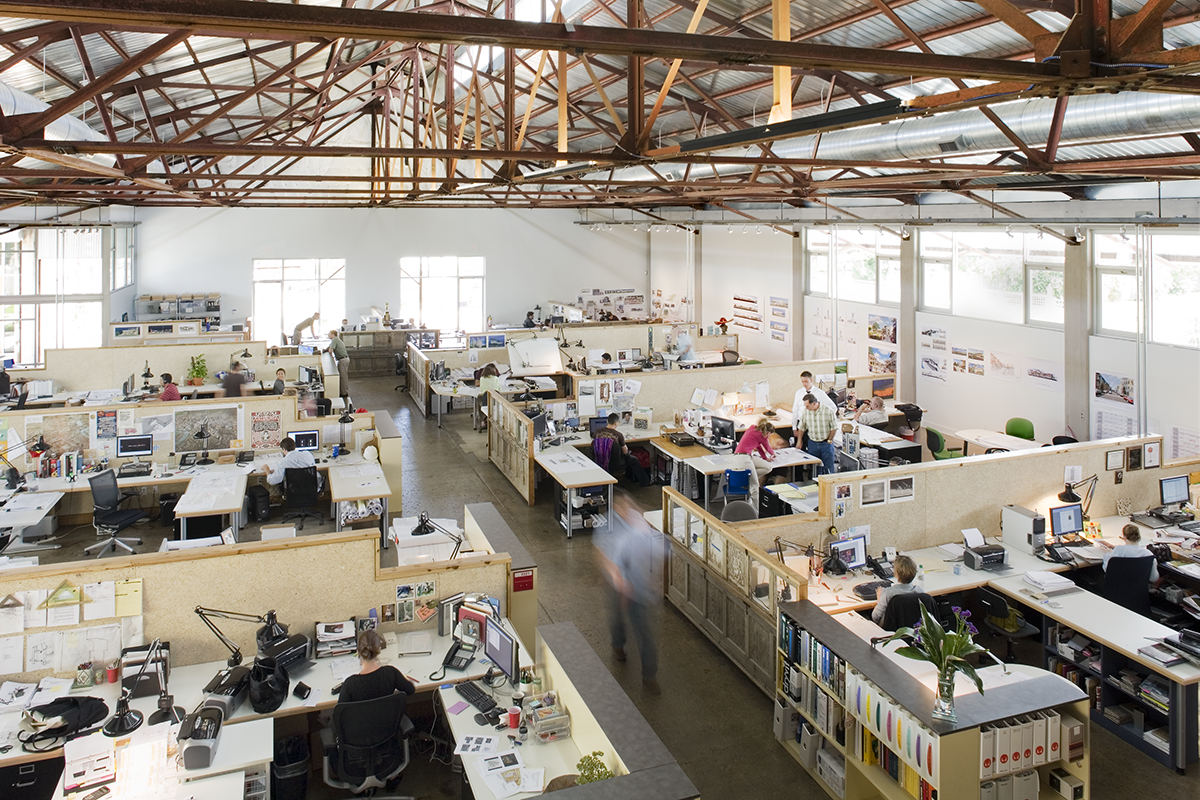
- Existing sectional garage doors were recycled as partitions and workstation end caps throughout the open-plan workplace.
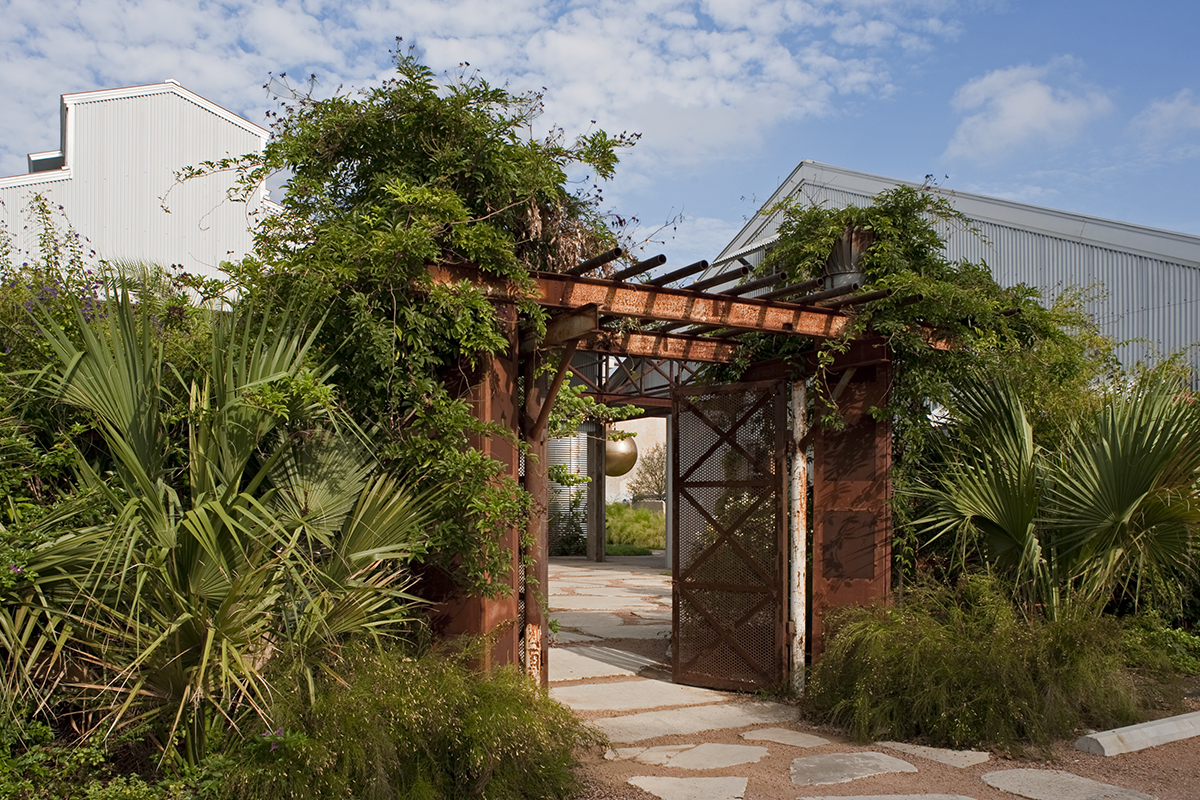
- The entire existing multi-level steel mezzanine structure was stripped out and reconfigured into 3 entry gates – two for the individual firms and one for the shared courtyard entrance to the staff parking area.
- Huge doors that enclosed the original trailer paint shed, were repurposed and installed as a hinged flexible divider in our office entry.
- Remaining industrial sash windows were fitted with expanded metal and used as fence components.
A Lush Garden Courtyard Adds to Wellbeing
Almost as important as the building, the surrounding garden courtyards create a green buffer zone. The campus common spaces provide front doors, socializing space, and circulation pathways between buildings. Floor-to-ceiling storefront windows afford generous, shaded views from our workspace into the landscape beyond, enhancing well-being. In a novel application of demolition spoils, the solid garden wall is made from huge pieces of the original concrete apron, tilted vertically and bolted to posts, alternating the smooth and exposed-aggregate sides of the slabs. Courtyard paving is also constructed from irregular pieces of demolished slab, infilled with decomposed granite.
Prioritizing Sustainability: Major Initiatives and Small Gestures
“Our adaptive reuse was certified as LEED Silver by the United States Green Building Council in 2007, the first in San Antonio,” recalls principal Nicki Marrone, AIA, who led our LEED initiative. In 2012, Alamo took the step of installing a solar array on our south facing roof, significantly offsetting our average power usage by 33.7% per year. Rainwater and HVAC condensate is collected in a 10,000-gallon cistern for use in low-water-demand landscape beds.
We have incorporated small daily housekeeping changes to promote awareness of sustainability. A few examples: since moving into the SoFlo campus, we offer guests filtered ice water in glasses rather than bottled water. While our digital workflow generates significantly less paper than in previous decades, we recycle office paper, plastic, and aluminum cans. Lastly, our coffee committee diverts grounds into home landscaping beds each week.